

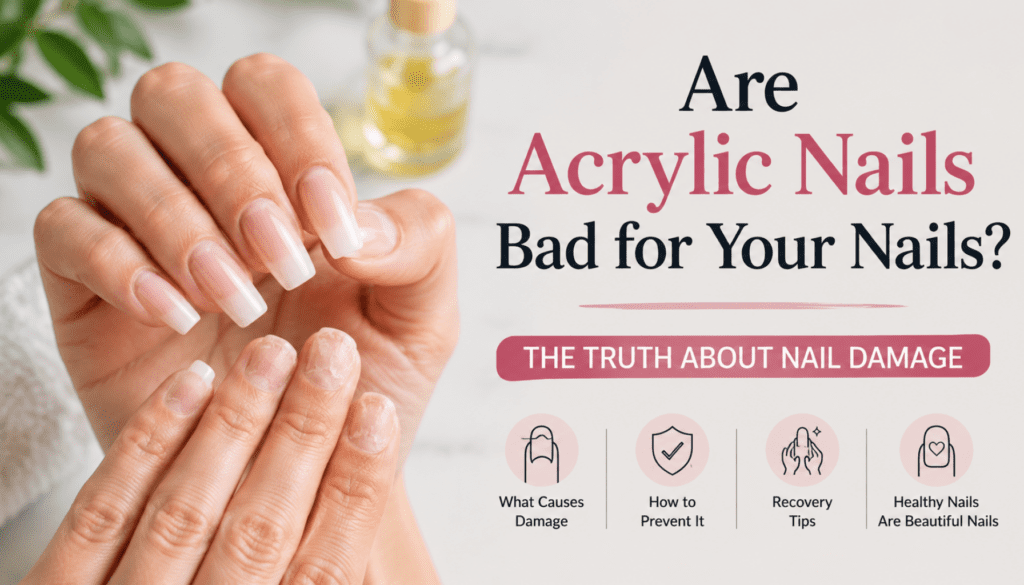
You might be surprised by how your natural nails look after removing the acrylic.
Maybe they look a little thinner than usual, or you may even feel rough.
Then you’ll automatically get this question in your mind:
“Are acrylic nails bad for your nails?”
In fact, this is the common question asked by many after removing the acrylic nails.
The Good news is, the answer is usually no.
Acrylic nails won’t automatically damage your natural nails.
However, the condition of your natural nails often depends on how the acrylics are applied, maintained, and removed.
If acrylic nails are applied properly, your natural nails will get less stress. On the other hand, you may get your nails damaged by over-filing, lifting, picking, or improper removal.
So, we will see in detail whether acrylic nails are really bad or if there is any reason for them.
Are Acrylic Nails Bad for Your Nails?
If I want to tell you straight, the answer is no.
Acrylic nails themselves are not generally bad.
Actually, most acrylic nail damage happens because of
- Over-filing
- Using an aggressive drill
- Peeling acrylics off
- Improper removal
- Ignoring lifting
In fact, some people wear acrylic nails and don’t even experience any problems from them.
That’s why, before blaming acrylic nails, it’s important to consider the application and removal process.
Why Do People Think Acrylic Nails Are Bad for Your Nails?
Usually, doubts start after removing acrylic nails.
When you see natural nails, you may feel they’re not the same as before.
Maybe it gets rough, feels dry, and sometimes has white patches.
That’s why many of them start to think whether acrylic damaged their nails.
And these changes are not permanent damage. While soaking in acetone, the nail plate may temporarily dry. At the same time, excessive filing may make the nails thinner.
The good thing is that, in the majority of cases, the changes are temporary. As your nails grow, the affected area is gradually replaced by healthier nail growth, and the appearance will also slowly improve.
Understanding Your Natural Nails
Before determining whether acrylic nails damage natural nails, it’s important to understand the structure of natural nails.
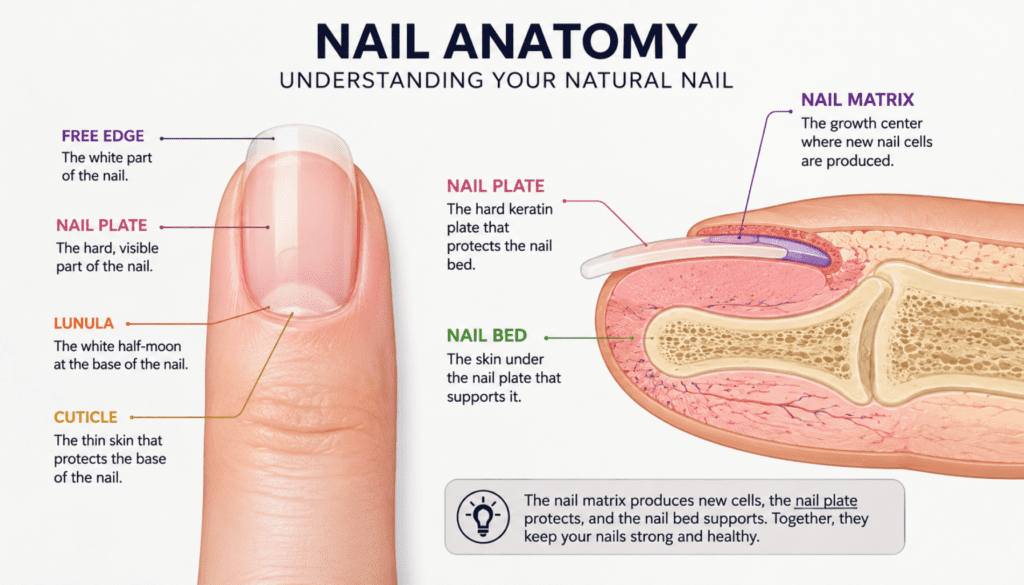
What Is the Nail Matrix?
The Nail matrix is the place where nail growth starts.
I will tell you simply, the nail matrix is the nail factory. If you have a healthy matrix, the nails will grow normally.
Fortunately, the acrylic products won’t come into direct contact with the matrix.
So, you won’t get permanent damage when acrylic is applied correctly.
What Is the Nail Plate?
The hard surface we see is the nail plate.
The interesting fact is that nail plates are not living tissue.
It is formed from dead keratin cells, so the nails don’t need to breathe.
In fact, the biggest common myth many say is “nails need to breathe”.
What Is the Nail Bed?
Below the Nail plate is the nail bed.
This will support the nail growth.
But if the acrylic lifts and moisture gets trapped, there is a high risk of increased bacterial growth.
How Acrylic Nails Actually Work
Many people think acrylic nails have dangerous chemicals.
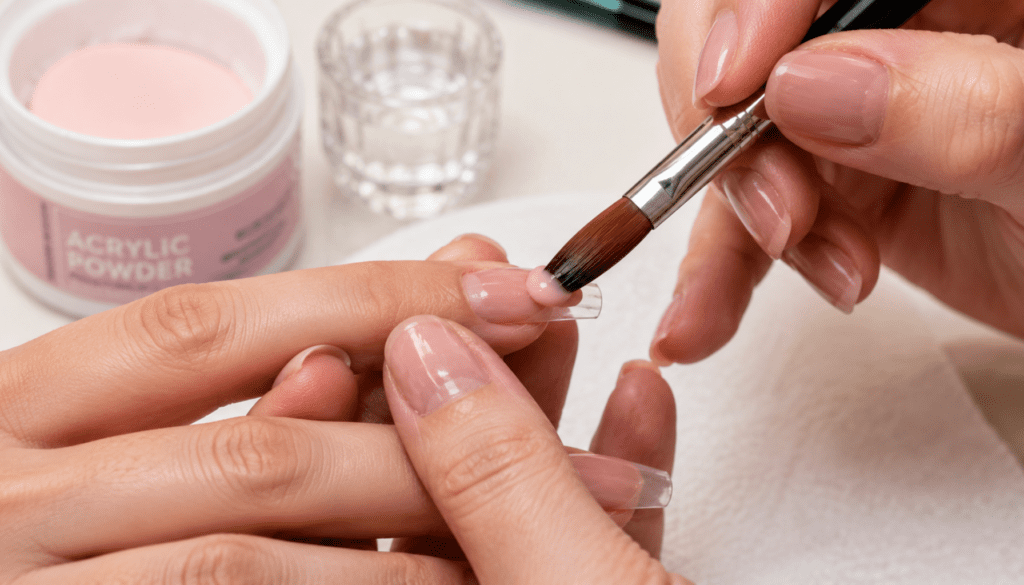
But the actual is very simple. For creating acrylic nails, two products are used:
- Liquid monomer
- Powder polymer
When mixing these two, a strong overlay will result that will settle hard on the natural nail.
Once it is dry, the acrylic will change into a solid material.
Importantly, the cured acrylic will not damage the natural nails; it serves as an enhancement layer.
Can Acrylic Nails Damage Your Natural Nails?
Yes, there is a chance of damaging the natural nails.
However, damage is usually caused not by the acrylic product itself but by the application process, maintenance, and removal.
Over-Filing the Natural Nail
When preparing the Natural nail, if you do excessive filing:
- You may get Sensitivity.
- Nails may get thin
- Feels Weak
- Delvop Ridges
Fortunately, these damages are temporary in most cases.
Improper Acrylic Nail Removal
Actually, the improper removal will create more damage than the application.
The Common mistakes are:
- Peeling
- Picking
- Pulling
- Excessive drilling
- Force removal
When peeling the lifting acrylic, the natural nail layers can also be removed.
That’s why the nails become thin after removing the acrylic nails.
I’ve already covered the complete process in my guide on Acrylic Nail Removal at Home, so you can check that article for detailed step-by-step instructions.
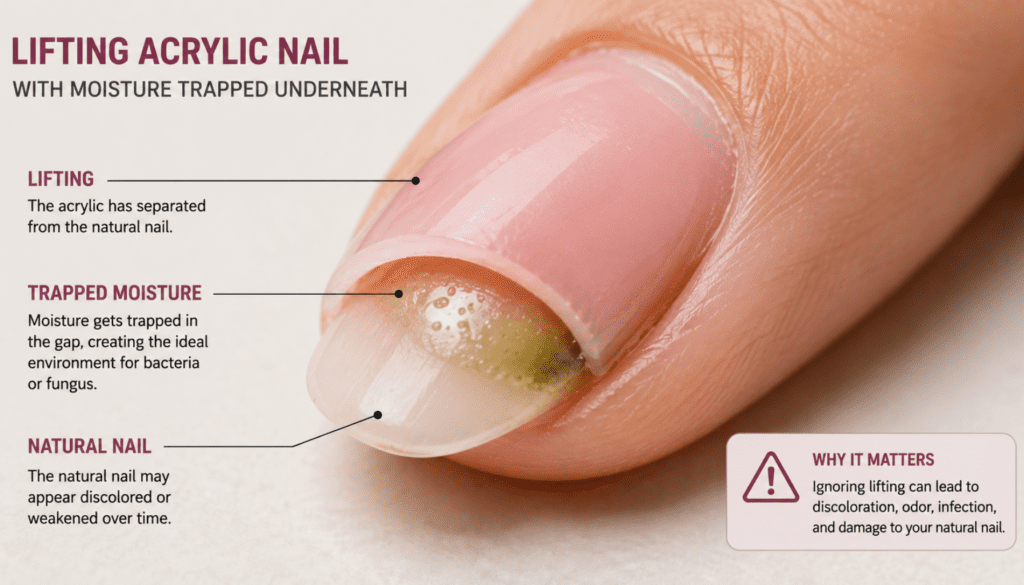
Lifting and Trapped Moisture
Lifting happens when the acrylic starts separating from your natural nail.
At first, it may not seem like a big deal.
However, if water gets underneath the lifted area, it can become trapped.
Over time, this may lead to problems such as:
- Green discoloration
- Unpleasant odor
- A higher risk of infection
That’s why it’s best not to ignore lifting.
If you notice it, getting it fixed sooner can help prevent bigger problems later on.
Normal Recovery vs Serious Damage
If your symptoms are listed in the left column, there’s usually no need to worry.
And, if you notice any of the symptoms in the right column, it’s a good idea to get them checked by a professional.
How to Recover Nails After Acrylics
Fortunately, in most cases, nails recover with proper care and patience.
Here’s what you should focus on in the first 90 days after removing acrylic nails.
First Few Days
For the first few days, focus on hydration.
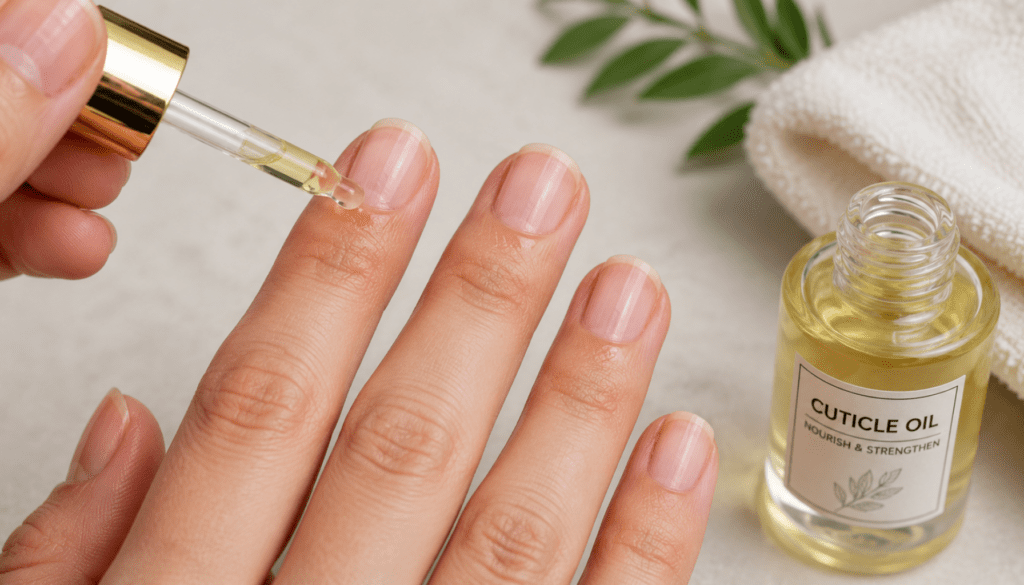
- Apply cuticle oil regularly.
- Use a moisturizing hand cream.
- Wear gloves while doing cleaning tasks.
These simple steps can help protect your nails from dryness and further damage.
First Month
During the first month, your nails may begin to recover, so it’s important to continue taking extra care of them.
- Keep your nails short.
- Continue using cuticle oil and moisturizer daily.
- Avoid harsh chemicals whenever possible.
At the same time, avoid using your nails as tools, and try not to pick, peel, or scratch them.
Following Months
Follow the regular nail care for the following growth, and healthy nail growth will gradually replace the damaged area.
And your nails may start looking stronger and healthier.
Most people notice improvement within a few weeks, and for some, recovery may take longer depending on the condition of the nails.
Keeping your natural nails healthy during recovery is just as important as safely removing acrylics.
If your nails break easily, you may also find my guide on Why Are My Nails Breaking Easily helpful.
Should You Take a Break Between Acrylic Nail Sets?
Not necessarily.
However, taking occasional breaks can be useful.
It gives you a chance to properly check your natural nails.
For example, you can:
- Look for any hidden damage under the acrylic.
- Check if your nails have become thinner.
- Notice any discoloration
- Give your nails some time to recover.
Taking a break isn’t mandatory. If your nails look healthy and you’re not having any issues, you can continue getting acrylic fills as usual.
Still, an occasional break can be helpful to keep an eye on your overall nail health.
Frequently Asked Questions
Are Acrylic Nails Bad for Your Nails?
No. Most damage comes from improper application, maintenance, or removal.
Do acrylic nails ruin your natural nails?
Usually not. If you follow proper care, the chances of ruining your natural nails are very low.
How long does it take nails to recover after acrylics?
Minor damage may improve within a few weeks. For full healthy nail replacement, it generally takes around 4–6 months.
Can damaged nails from acrylics grow back?
Yes. Most acrylic nail damage will gradually grow out as healthy nail growth replaces the affected area.
Can acrylic nails cause fungal infections?
Not directly. However, lifting and trapped moisture may increase the risk of infection.
Final Thoughts
So, Are Acrylic Nails Bad for Your Nails?
Fortunately, the answer is no. Acrylic nails themselves won’t create damage.
Instead, problems mostly come from over-filing, lifting, poor maintenance, and improper removal.
But all these issues can be fixed with proper care. Choose a qualified technician, follow Regular maintenance, and, when removing, follow the safe removal method.
If you follow these simple steps, you can enjoy acrylic nails and, at the same time, keep your natural nails healthy.
And if your nails currently feel thin or weak, regular oiling and gentle care can help strengthen them. If you’re new to acrylic nails, learning the basics can help you avoid many of the common mistakes that lead to nail damage.
You can start with my Acrylic Nails for Beginners guide.
