
Acrylic Nails – Beauty vs Reality
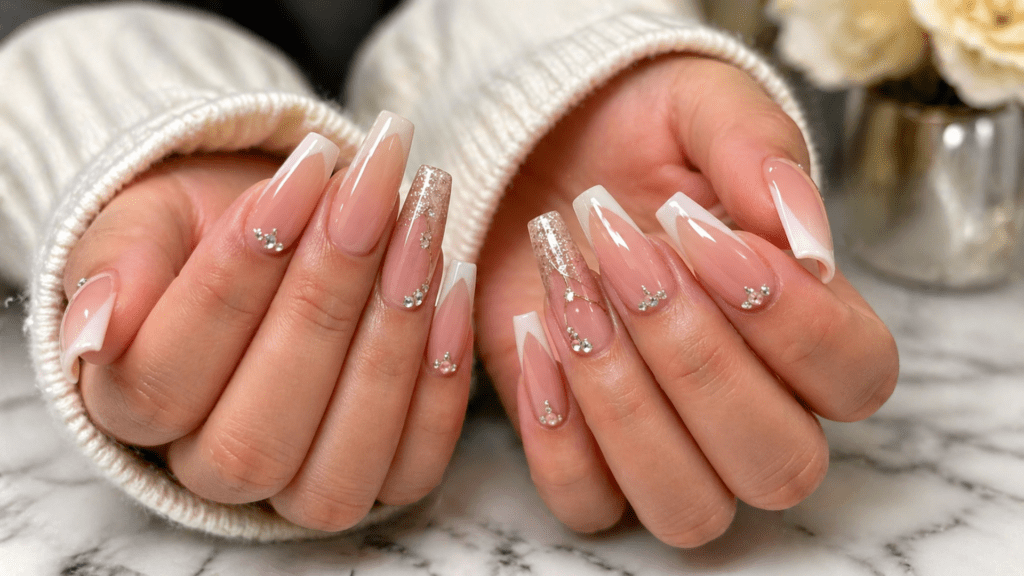
The first impression of acrylic nails will be very attractive. The long nails, perfect shape, smooth finish, to be honest, it will be very, very clean and give a polished look. As a result, many of you started using it regularly.
But after using it for some time, you will naturally get many doubts,
You will start to think, “Is this safe?” “Really Non-toxic?”, especially when your nails get weak, or when you see any damage on your nails while removing, these doubts will get even stronger.
Actually, this confusion is very common, even though I have thought about this many times. While using it, the look was pleasing, but I later got worried about my nail condition.
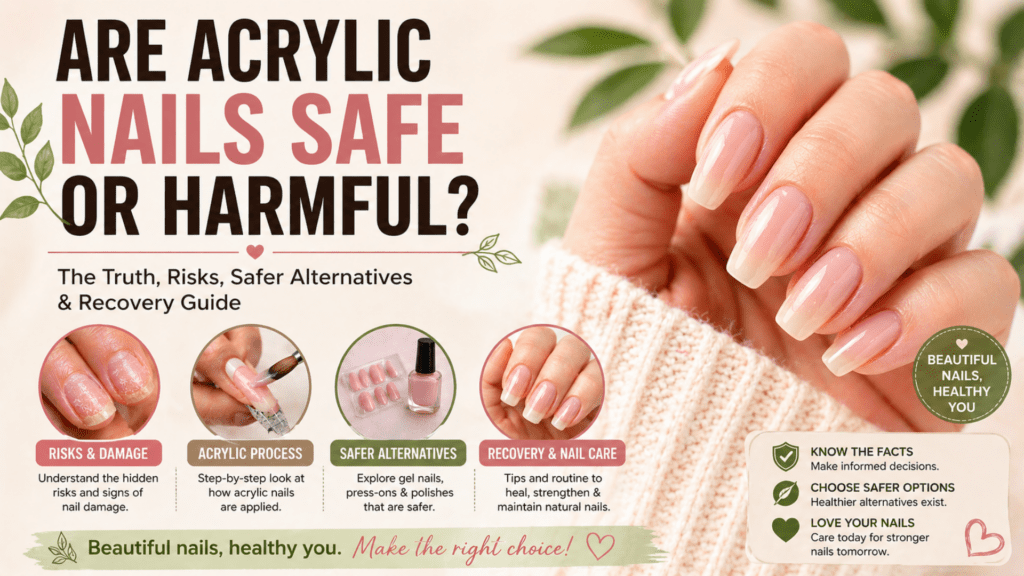
If you want me to tell the conclusion straight, Acrylic nails are not completely safe; they give a strong finish, but there is a greater risk of your nails becoming weak over the long term.
Yes, in this article, we will see, step by step, what acrylic nails are, whether they are safe, and, importantly, what the best safer alternatives are.
What are acrylic nails?
I will give a simple explanation. First, the basics: acrylic nails are made with two main components: liquid (monomer) and powder (polymer).
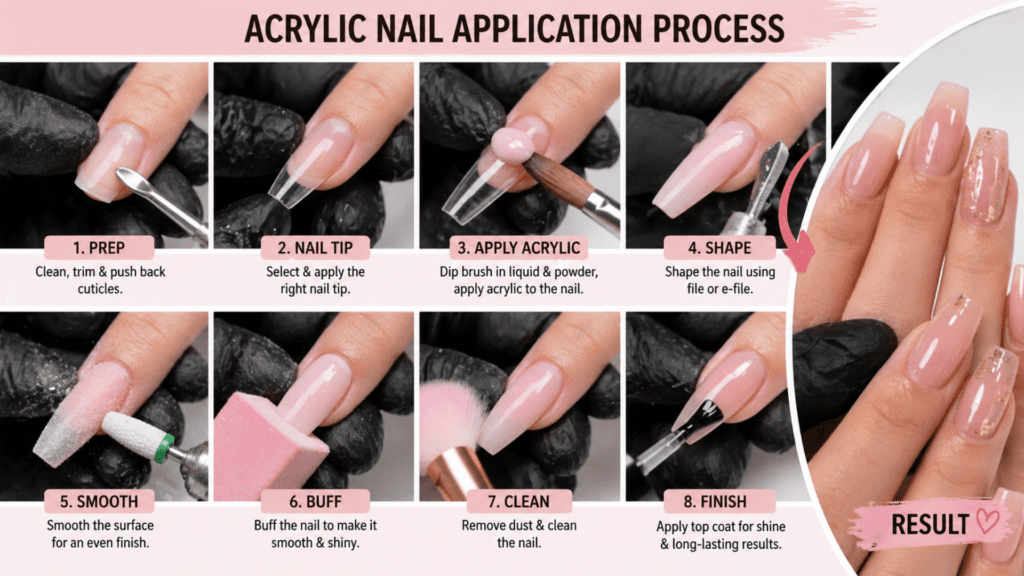
While mixing these two, the paste will be ready. If you apply it to your nails, it will harden in a few seconds, giving you stronger acrylic nails.
But there are other processes involved when doing acrylic nails, too. First, the natural nail surface will be filed to help the paste adhere more strongly; then the paste will be applied, and then the shape and a smooth finish will be achieved.
Overall, the results will be good, as it is strong, long-lasting and gives a premium look. However, the main concerns, such as filing and the use of chemicals, can affect natural nail health.
Are acrylic Non-Toxic?
If I want to tell you straight, acrylic nails are fully non-toxic.
The appearance of the Acrylic nails will look very strong and long-lasting. But the products used to make the acrylic contain chemicals, which is the main concern.
What problem does it cause?
While using acrylic nails, these chemicals, especially acrylates, cause
- Skin irritation
- Some may get an allergy.
- Repeated use can weaken the natural nail.
What do they mean by “Non-toxic”?
In the market, some products are called “non-toxic” or l”low chemical”, which does not mean there will be no chemicals.
They mean that some harmful chemicals are removed.
In simple terms, Non-toxic doesn’t mean completely safe; it means a little safer.
What Problems Can Acrylic Nails Cause?
Now, we will see the real side of Acrylic nails.
If you regularly use acrylic nails, you may not notice the problem immediately. But you will notice the impact gradually.
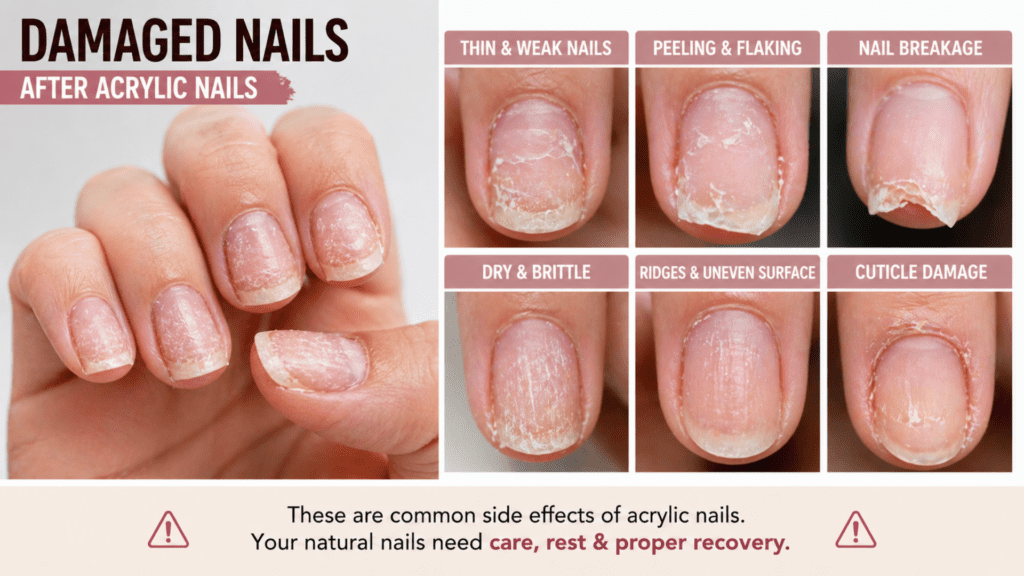
Nail Damage
First, the nail damage will happen, which is most common.
In the filing process, the natural nail will get thinner. In addition, repeated applications will weaken the nails.
This causes,
- Peeling
- Breakage
- Slow growth
Skin Reactions
Next, acrylic chemicals will suit some people. As a result, skin reactions will develop.
The Common symptoms are,
- Itching
- Redness
- Swelling
Once you get sensitivity, it won’t go away easily.
Infection Risk
Apart from that, infections are a major issue.
If Acrylic gets a little lifted by mistake, the moisture will get trapped inside, and bacteria can grow easily.
Chemical Exposure
Finally, while applying the application, you cannot ignore the strong smell; it may cause discomfort to some people, like
- Headache
- Dizziness
Overall, these problems may not affect you immediately, but they may do so gradually.
Are Acrylic Nails Safe for Kids?
Acrylic nails are not safe for kids.
Kids’ nails will be very soft, and their nail beds will still be developing. In this stage, if you use strong chemicals that cause more damage to their nails.
- Natural nails get weakened.
- Nail growth will be affected.
- Skin irritation or allergy
The most important thing is that kids’ nails will be damaged quickly, and recovery will be very slow.
What are the safer options ?
You can go with kids’ safe nail products,
- Water-based nail polish
- Peel-off nail polish
- Simple press-on nails
These products are very gentle on kids’ nails and, when removed, do not cause any damage.
If you are looking for safe products, this guide will be useful:
Best Kid-Safe Nail Polishes (Non-Toxic & Easy to Remove)
Safer Alternatives (Better Choices Without Damage)
Now, we will see the good part.
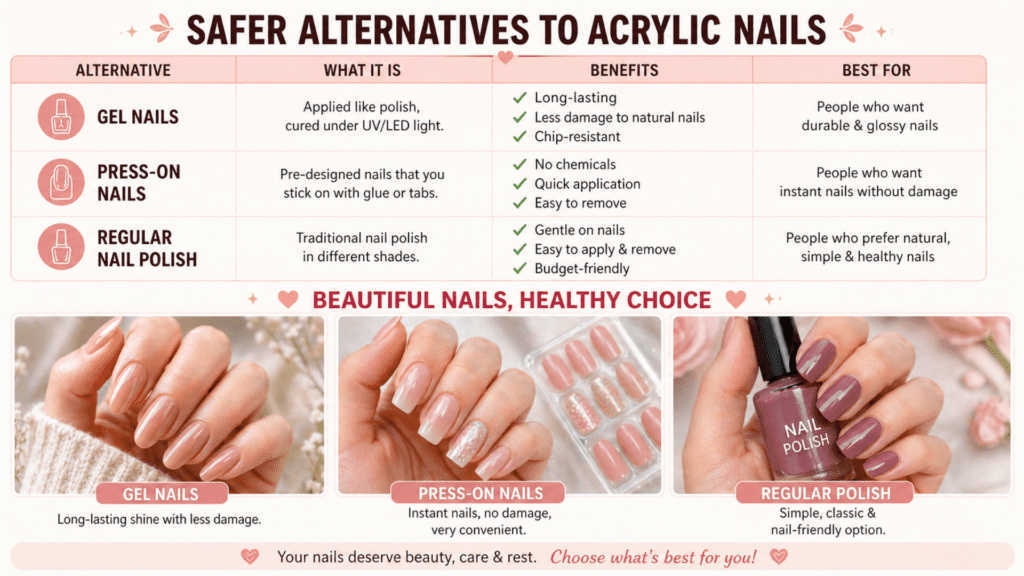
Even if you avoid acrylic nails, it doesn’t mean you have to stop styling your nails completely. In fact, there are so many safer options available, which can give you a good look without causing too much damage to your natural nails.
So, let’s compare with each other in a simple way,
Easy Comparison
As shown in the comparison table above, each option has pros and cons. However, if your priority is safety, non-toxic polish or press-on will be the best choice.
Because it causes very minimal damage and is good for regular use, too, compared to acrylics.
What Do “Non-Toxic” Labels Really Mean?
You might have noticed “5-free”, “7-free”, and “10-free” labels. At first glance, you may think it’s safe and completely chemical-free.
But actually, that’s not how it works,
These labels will state that some common harmful chemicals have been removed. For example, “5-free” means that 5 specific chemicals are removed.
It doesn’t mean fully chemical-free; the nail product will still contain more ingredients that help give a smooth, long-lasting finish.
Why is this important?
Many people assume that “non-toxic” means 100% safe, but that’s not always true. Understanding this helps you make better choices when choosing nail products.
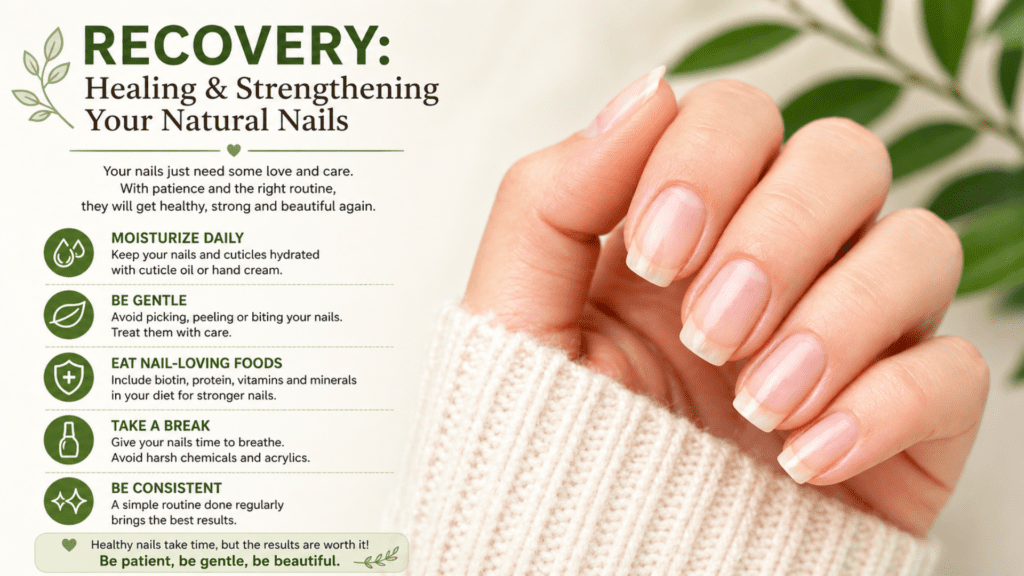
How to Recover Your Nails?
If your nails feel weak, thin, or easily break after using acrylics, don’t worry, we can definitely recover.
But you need some patience and should give consistent care.
Give your nails a break
First, give your nails a proper break. Don’t use acrylic or extensions continuously; give your natural nails a break, and they will gradually regain their strength.
Use cuticle oil daily
Next, hydration is very important. Daily use of cuticle oil on your nails will keep them moisturised and reduce dryness. You can see the improvement; this will help to avoid further damage.
Be gentle with your nails
At the same time, handle your nails gently. Don’t do Harsh filing, force-removing. This will further increase the damage, so it’s better to be careful.
Improve your nutrition
Along with external care, nutrition is very important. Including Protein, iron, and biotin-rich foods will naturally improve nail growth. If you are not sure what to eat, check out the best foods for naturally promoting nail growth.
Overall, if you give personal care, the nails will start to recover gradually around ah paatha, correct care follows pannina 2–4 months.
How to Choose a Safe Nail Salon
Need to be extra careful when choosing a salon to avoid unnecessary problems. Not all salons follow the same standards, so it’s important to choose the right place.
What to look for in a good salon
- Clean and properly sanitised tools
- Proper ventilation, no strong, suffocating smell
- Experienced and trained technician
These signs usually indicate that the salon follows proper hygiene and safety practices.
What to avoid?
- Strong chemical smell inside the salon
- Rough or careless nail handling
- Dirty or unclean workspace
If you have any doubts, don’t hesitate to ask the salon. A good salon always explains products and processes clearly.
Final Thoughts
Acrylic nails will give a beautiful look; there is no doubt about it.
But you should understand that, for regular use, this is not the safest option. The nail will get damaged in the long term.
I am not telling you to avoid completely, be aware and make decisions. There are many safer alternatives; give proper rest and, most importantly, prioritise long-term health.
For more simple nail care tips and safe nail ideas, visit The Natural Nail.
